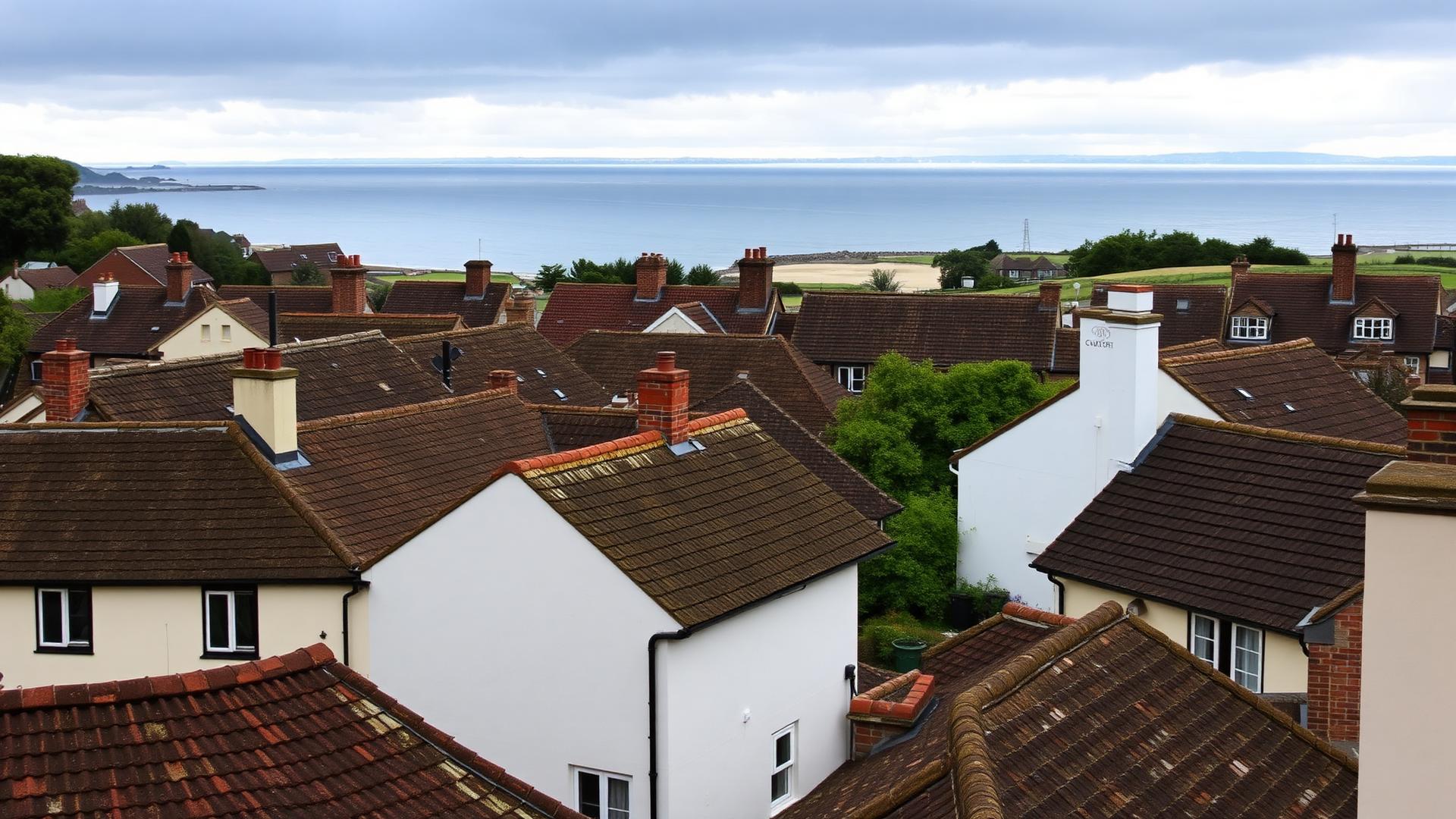
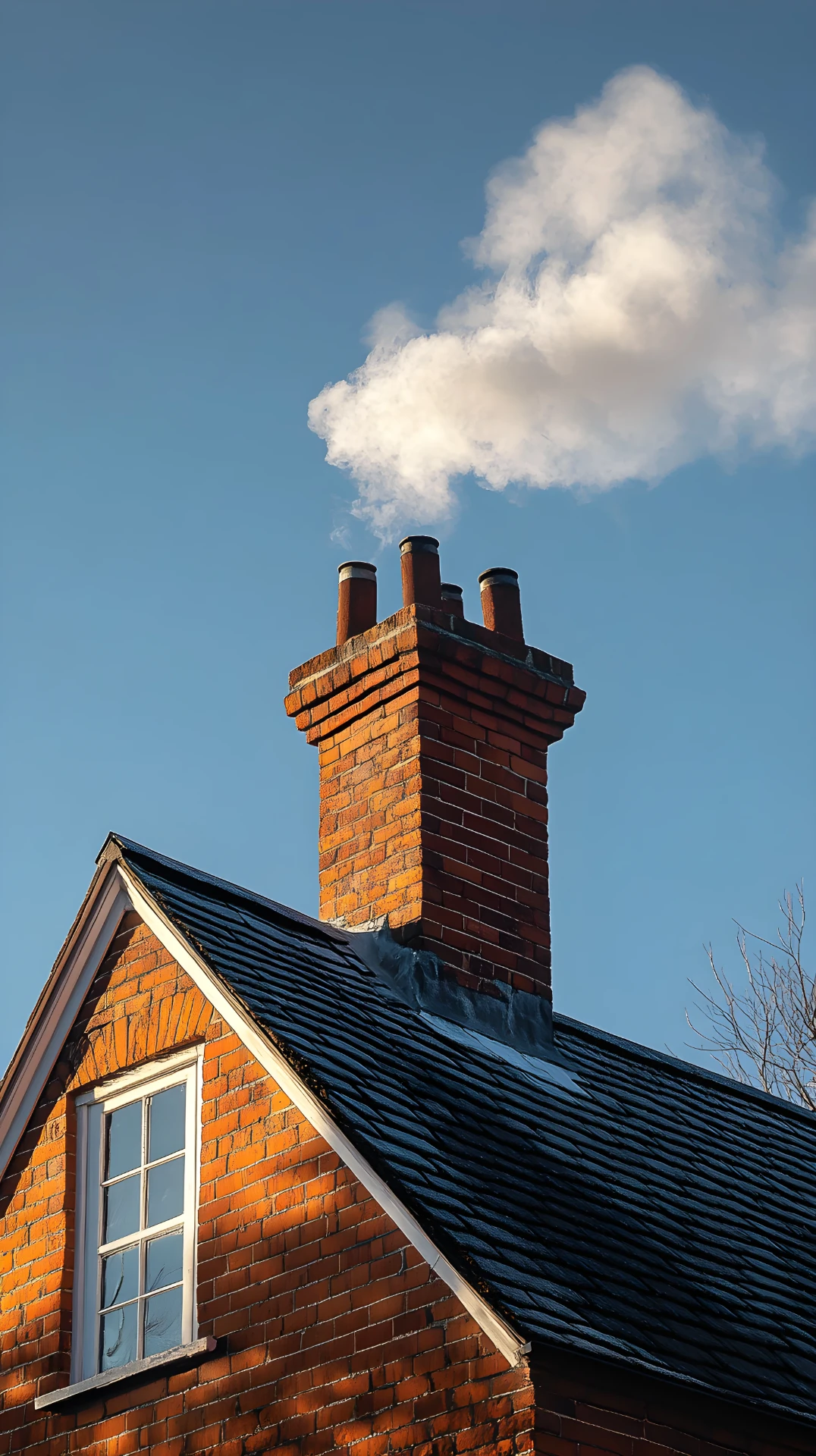
Removal is often the practical answer, though there are two quite different jobs hiding under that same phrase.
Warning signs on a redundant Hampshire stack
- Mortar joints raked out by weather, pointing crumbling to the touch
- Cracked flaunching, or pots sitting loose in it
- Tide-mark staining on the breast in the bedroom or landing
- Lead flashing lifted at the back gutter or stepped into the brickwork badly
- Spalled brick faces after a hard frost
- A flue capped years ago with no ventilation left to it
How a dead stack turns into internal damp
Water gets in at the pots, through the failed lead joint and straight down an uncapped flue. The brickwork soaks it up and carries it inward, so the damp shows on the breast well below the point it actually got in.
Where a flue's been sealed airtight rather than capped and ventilated, that trapped moisture has nowhere to go, and the staining just keeps getting worse rather than better.
- 1Driven rain gets in at the top of the stack
- 2Cracked flaunching around the pot
- 3Open pointing and spalled brickwork
- 4Water tracks down the flue
- 5Lead flashing — another failure point
- 6Staining shows on the chimney breast below
Partial or full — what each actually means
Partial removal ends the maintenance and the leaks while leaving the breast and the elevation as they are. Full removal continues down through the rooms below, gains you floor space, and calls for structural support designed in and building control involved.
Retain & repair
Repoint it, re-flaunch, renew the flashing and cap it off. Keeps the roofline as built, though it does mean ongoing maintenance.
Down to roof line
We take off the exposed section and make the roof good, leaving the breast intact inside. Less disruption, and no internal work.
Full removal
Stack and breast come out completely, with structural support designed in. The biggest job, but it frees up floor space.
Taking the stack down and closing the roof
We dismantle it by hand, keep the debris controlled, cap or remove the flue, and support the remaining brickwork. The opening is then framed out, underlay dressed in, and the covering matched across so the roof plane reads as one.
Access & protection
Scaffold up to the stack, roof and grounds protected, and a debris route planned before a single brick moves.
Take down
We take the stack down course by course rather than pushing it over, lowering brick and pot out safely.
Support & make good
The opening is framed and supported, rafters and battens made up, and underlay dressed in.
Weather the roof
Tiles or slates laid to match, leadwork or a weathered detail finished, so the roof reads as one plane.
Two jobs, one name
Removal above roof level
The stack is taken down to just beneath the covering, and the opening framed and closed with matching tiles or slates and correctly lapped underlay. All the work happens outside, the interior's untouched, and the ongoing maintenance liability disappears along with the masonry.
Full removal including the breast
The breast is removed floor by floor, freeing up usable space in the rooms below. This is structural work: masonry above needs supporting on beams or engineered gallows brackets, floor and ceiling structures need making good, and building control is involved throughout.
Terraces, semis and shared stacks
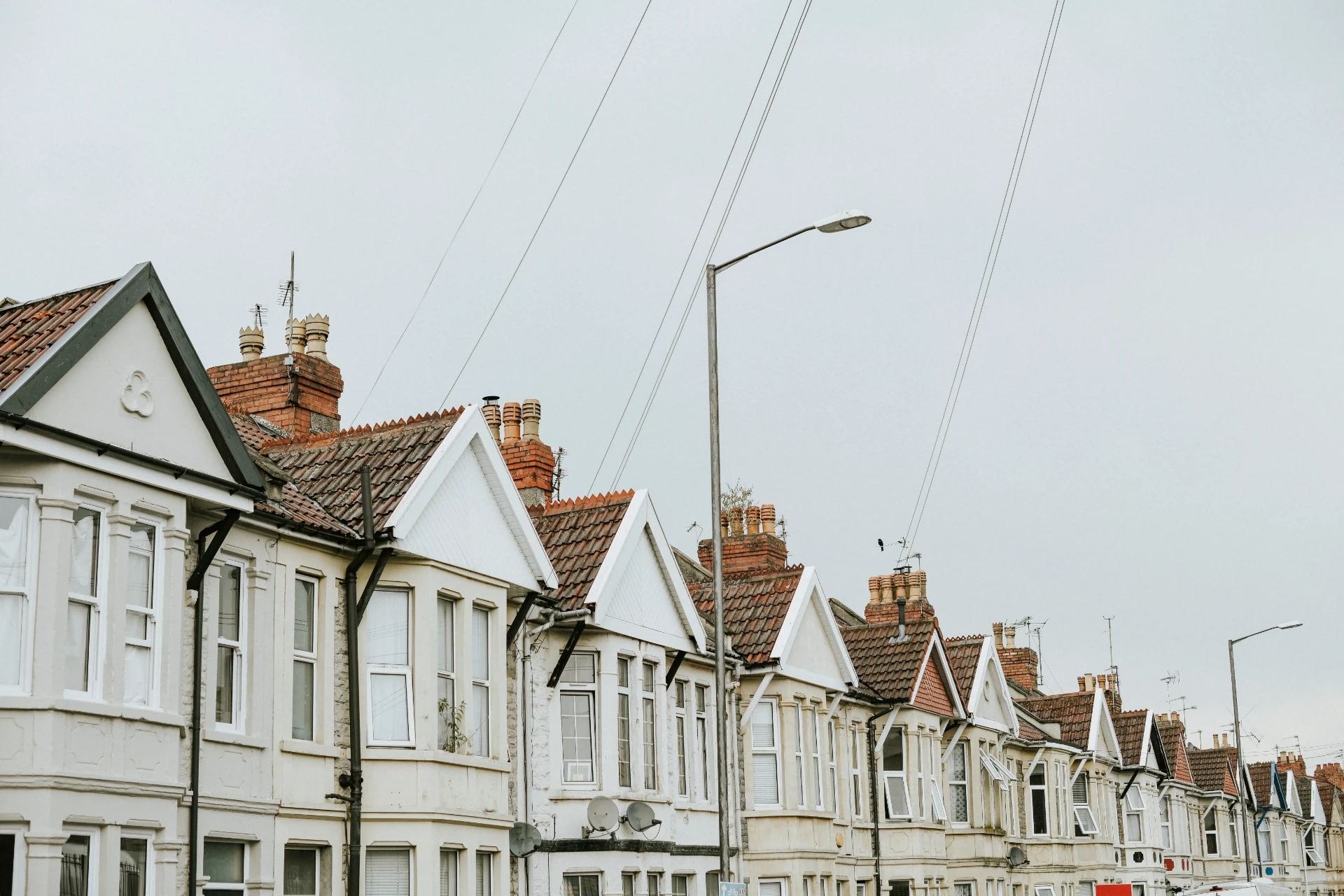
Most Hampshire terraces and semis have stacks that straddle the party wall. Only the half serving your property can be removed, the cut face has to be weathered properly, and your neighbour's flues need to stay serviceable.
That makes it Party Wall Act territory. We'll explain what notice is needed and design the work so the neighbouring property is left sound.
Before removing, consider keeping
A stack in reasonable condition can often be rebuilt from the flaunching down a few courses, re-flashed and repointed for considerably less than removal would cost. Wood-burning stoves have also made working flues desirable again, and an original stack on a period Hampshire house often carries real character value on the street.
We'll give you the honest comparison rather than assume you want it gone.
Leaving the roof right
Tiles salvaged from the removal are reused around the closed-up area so the patch weathers in nicely with the rest of the roof. New rafters and battens carry the covering across the opening, and the underlay is lapped into the existing layers rather than just butted against them.
Common questions
What homeowners in Hampshire usually want to know about chimney removal.
Ask us anything