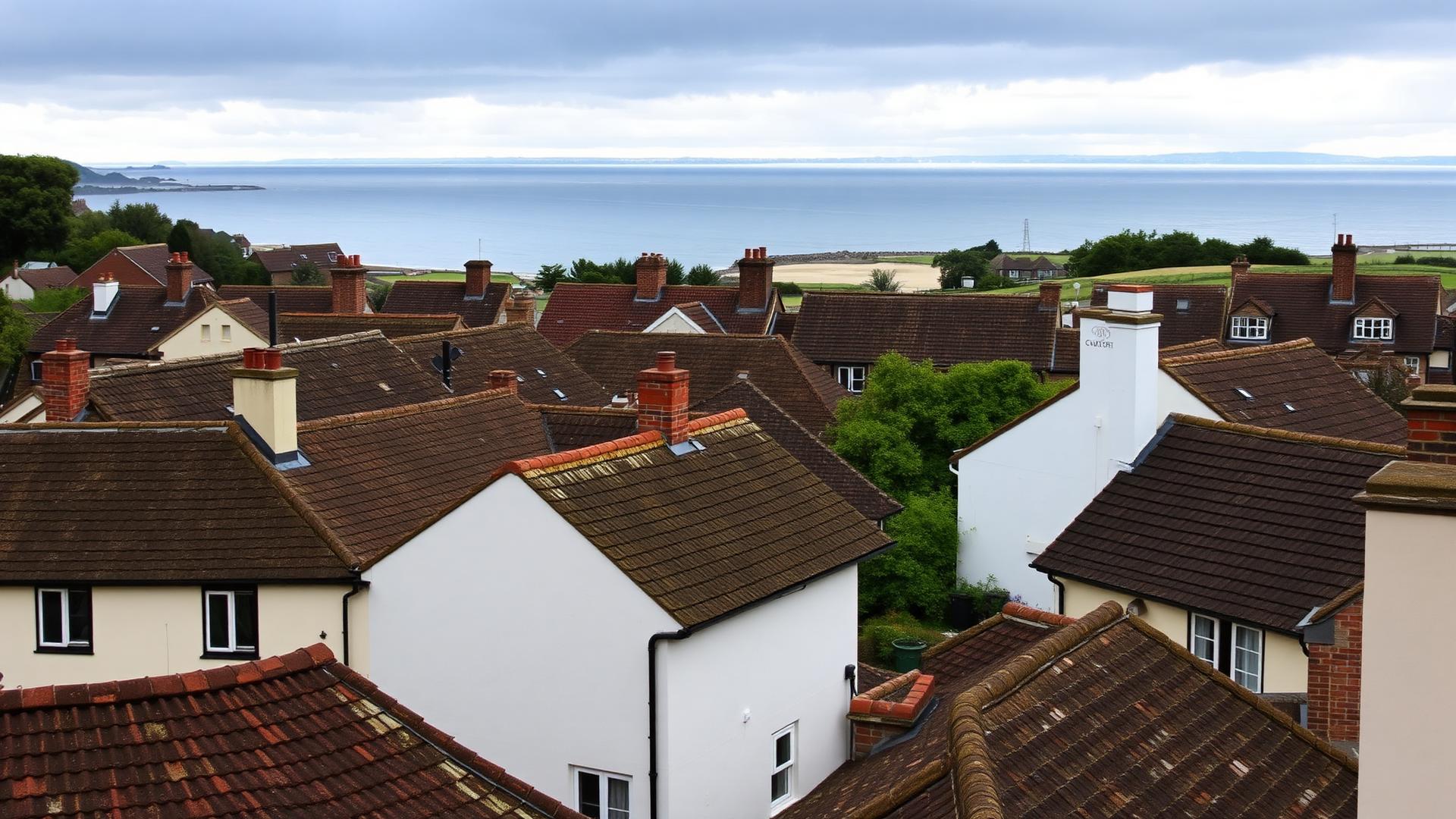
Here's a straightforward guide to spotting what's been sprayed into your loft, what questions it raises, what assessment and removal may involve, and how the alternatives compare. We carry out this work across Dorset, Hampshire and Somerset.
How to tell what is in your loft
- A pale, rigid or spongy layer sprayed directly onto the underside of the roof
- Rafters, battens and underlay are covered, so nothing can be inspected
- The gaps at the eaves that used to let air through have been filled
- The loft smells musty, or condensation appears on stored items
- A surveyor, insurer or lender has raised questions about it in writing
- A sale, remortgage or equity release application has slowed or stopped because of it
Why spray foam causes problems
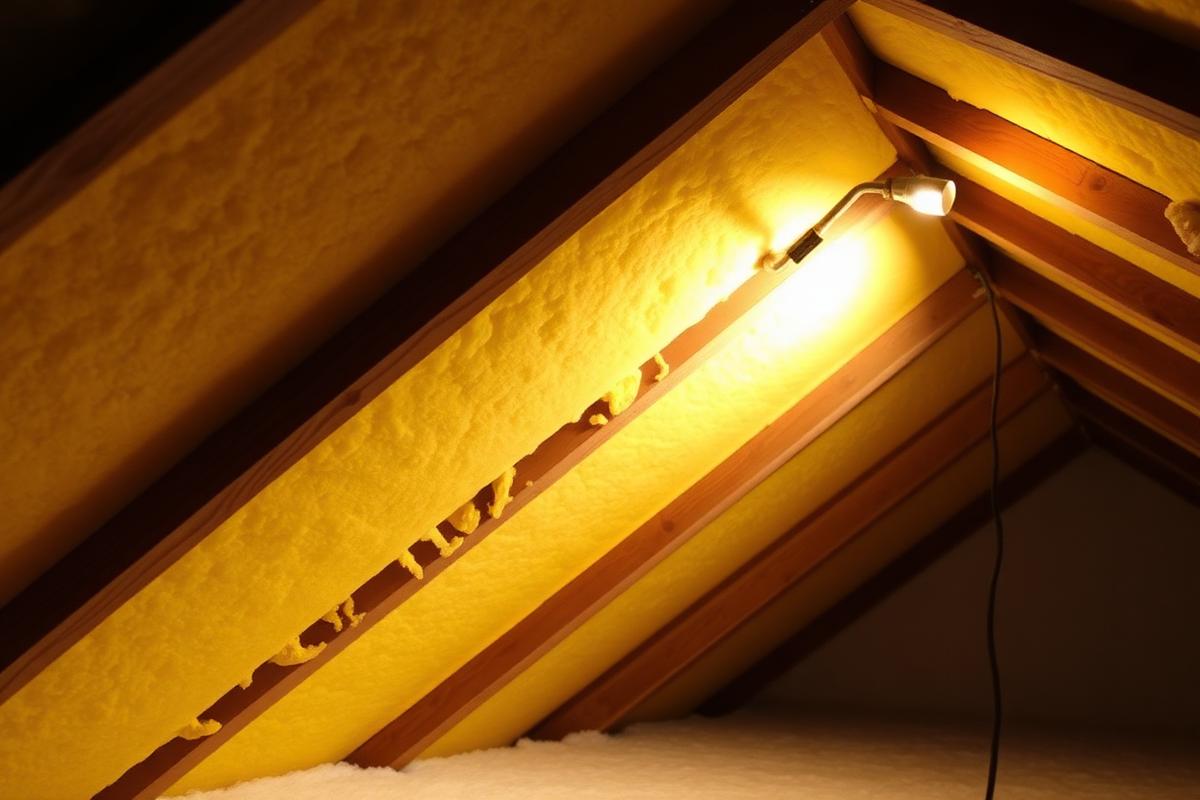
Foam can hide rafters, battens and underlay, making inspection difficult. The effect on moisture depends on the roof build-up, ventilation, vapour control and how the foam was installed; a roof assessment is needed rather than a blanket conclusion.
Where the foam is bonded to timber or has covered ventilation paths, removal may be considered. We look at the construction and condition first, then explain the practical options in plain English.
- 1Spray foam bonded to the underlay, battens and rafters
- 2Eaves ventilation blocked
- 3Moisture held against the timber
- 4Rafters, battens and underlay cannot be inspected
What full removal involves
We start in the loft, working out the foam type, how thick it's been sprayed and how much is bonded to the timber rather than the felt. That one visit tells us the method and the price — which is why we'd always rather see the loft before quoting a figure.
The foam's then cut and scraped back from rafters, battens and underlay, with the hatch, access route and rooms below protected throughout. All the waste leaves site with us. Once the structure's exposed we photograph it, reopen the ventilation path at the eaves and reinstate insulation at ceiling level where that's part of the job.
Loft survey
We check the foam type, thickness and how much timber is bonded, and price it from what's actually there.
Strip out
Foam cut back from the rafters, battens and underlay, with the loft and access route protected throughout.
Timber inspection
Once the structure's exposed, we photograph it so the roof can finally be properly assessed.
Reinstate
Waste removed, ventilation reopened at the eaves, and insulation put back at ceiling level.
Remove, partially strip or leave it — compared honestly
Leaving foam in place costs nothing today but can cost you later: the roof stays uninspectable, the ventilation problem's still there, and the objection comes back every time the property's valued. A partial strip can be the only realistic option on a difficult or fragile roof, but residue left bonded to timber still hides part of the structure.
Removal may restore access for inspection and allow ventilation details to be addressed, but it is not automatically the right answer for every roof. We'll explain what each option solves and what it leaves in place before we quote.
Leave it
Costs nothing today, but the roof stays hidden and any ventilation or inspection concerns remain to be assessed.
Partial strip
Cheaper, and sometimes it's all that's possible on an awkward roof. Any residue left on the timber will still hide parts of the structure.
Full removal
Removal can expose the timber for inspection and allow ventilation details to be reviewed — and we photograph what was underneath.
What we find underneath, and what happens next
The condition beneath foam varies. We may find sound timbers, or defects such as perished underlay, decayed batten ends or softened rafter feet; an inspection is needed to separate what was already present from what the installation may have concealed.
If repair work's needed we itemise it separately from the removal, with photographs, so you can see clearly what's the strip-out and what's the roofing — and take the roofing elsewhere if you'd rather.
Cost, timescales and lender paperwork
Price depends on the foam type, the area sprayed and how much is bonded to timber, not the size of the house. Most domestic lofts take one to three days, with the loft out of use while we're up there.
We give you a written description of the work with before-and-after photographs of the roof structure, which is what a surveyor or lender generally wants to see. We can't promise a particular lending decision — that's theirs to make.
Common questions
A few things homeowners often ask us about spray foam insulation removal before booking a survey or quote.
Ask us anything