
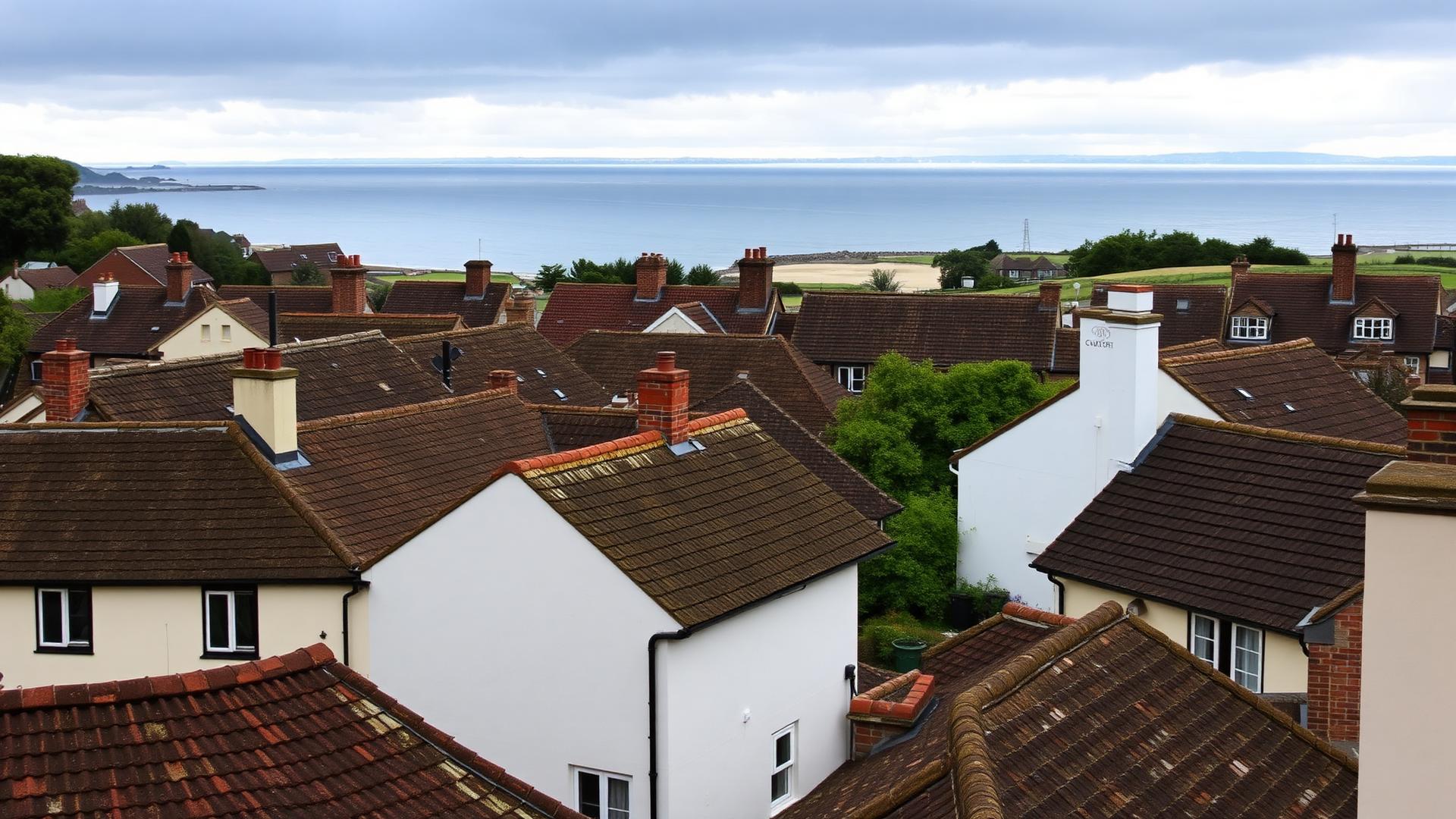
We work right across the county — the conurbation in the south east, the Jurassic Coast towns, the market towns of north Dorset and the villages in between — taking on repairs, full re-roofs, flat roofs and the specialist jobs most general builders would rather leave alone.
The roofs we see most often in Dorset
Stone and clay-tiled traditional properties
Purbeck and Portland stone slates, handmade clay tiles and thatch-adjacent stock are common inland and around the Purbecks. These roofs are heavy, laid in diminishing courses, and pegged or bedded in ways a modern covering just isn't. They can go on being repaired for a very long time — as long as whoever's up there understands how they were built in the first place.
Victorian and Edwardian terraces
Terraced streets in Bournemouth, Poole, Weymouth and Dorchester share party walls, secret gutters and long unbroken slate slopes. When we trace a leak here, it's usually a valley, a back gutter behind a parapet, or flashing where a neighbour's later extension meets the original roof.
Post-war and modern estates
Concrete interlocking tiles from the 1950s onwards are now reaching the end of their working life across the county. Failing sarking felt at the eaves, tiles starting to delaminate, and mortar-bedded ridges losing their grip — these are the usual signs, and often the reason a repair chat turns into a re-roofing one.
What coastal exposure actually does
Salt air corrodes nails, clips and steel fixings faster than inland air ever will. Driven rain finds its way into laps and abutments that would stay perfectly dry twenty miles further north. Wind uplift on an exposed south-facing slope loosens ridge and verge details first, then works its way along the roof.
That's why we specify work differently near the coast: stainless or non-ferrous fixings, mechanically fixed dry ridge and verge systems rather than mortar alone, and extra care over how flashings are dressed and clipped.
Working within Dorset's planning context
Large parts of the county sit within conservation areas, the Dorset National Landscape, or contain listed buildings. Where that's the case, the covering, the detail and sometimes the fixing method are all constrained — you may need a like-for-like natural slate or stone replacement rather than an easier modern alternative.
We'll tell you where we think consent is likely to be needed and quote for the option that will actually be approved, not the cheapest one that could land you in trouble later.