We attend emergency call-outs, assess what is safe to do, and talk you through temporary protection and any permanent repair work once the conditions allow.
When to call an emergency roofer
- Water actively coming through a ceiling or light fitting
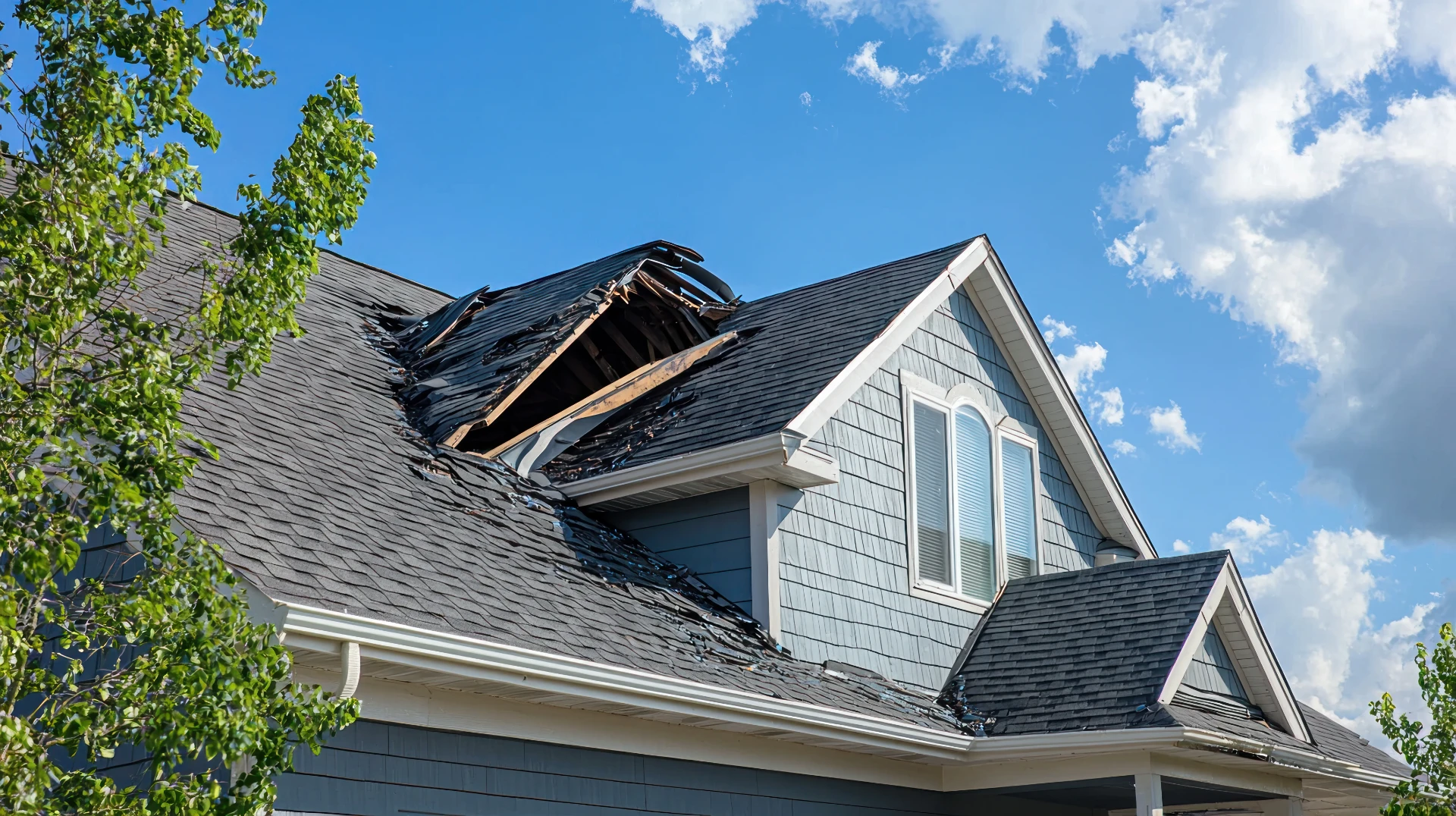
- Tiles or slates blown off in high winds
- Storm-damaged, leaning or cracked chimney stacks
- Ridge tiles or flashing lifted or displaced
- A flat roof that has split or blistered and is letting water in
- Debris impact damage from fallen branches or aerials
- Loose material at height that could fall onto a path or road
What happens on an emergency call-out
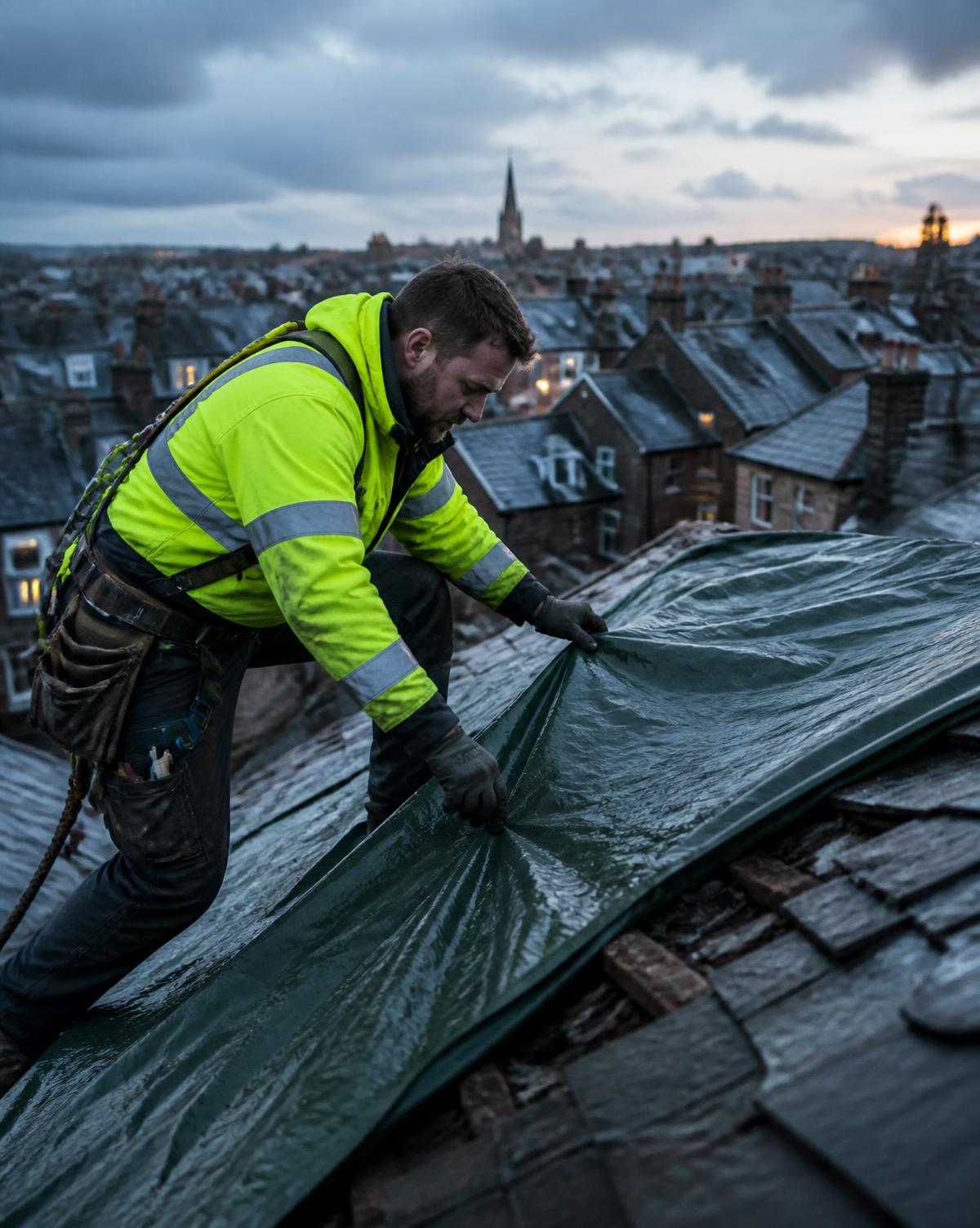
First, we make the area safe — removing or securing anything at risk of falling. Where a full repair cannot be done safely on the day, we use temporary weatherproofing or sheeting to protect the opening as far as conditions allow.
Once the property's protected, we assess the full extent of the damage and give you a written quote for the permanent repair. If the damage might be covered by your buildings insurance, we can supply photographs and a clear description of the damage for your claim.
Reducing storm damage risk
Most storm damage starts with something that was already loose. Regular checks of ridge lines, verges, flashings and gutters catch the weak points before a gale finds them — and routine repairs are far cheaper than an emergency call-out plus redecorating inside.