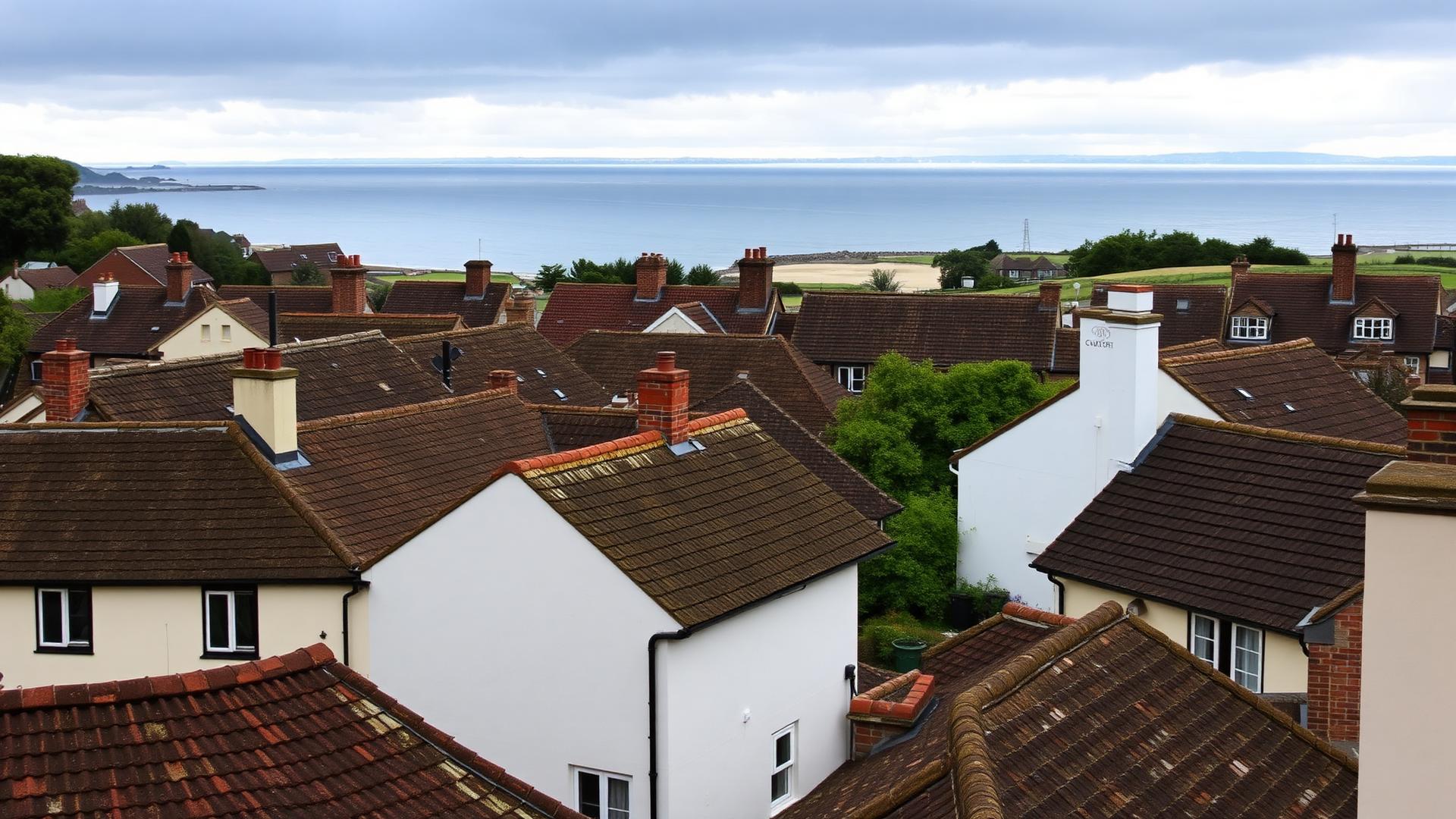
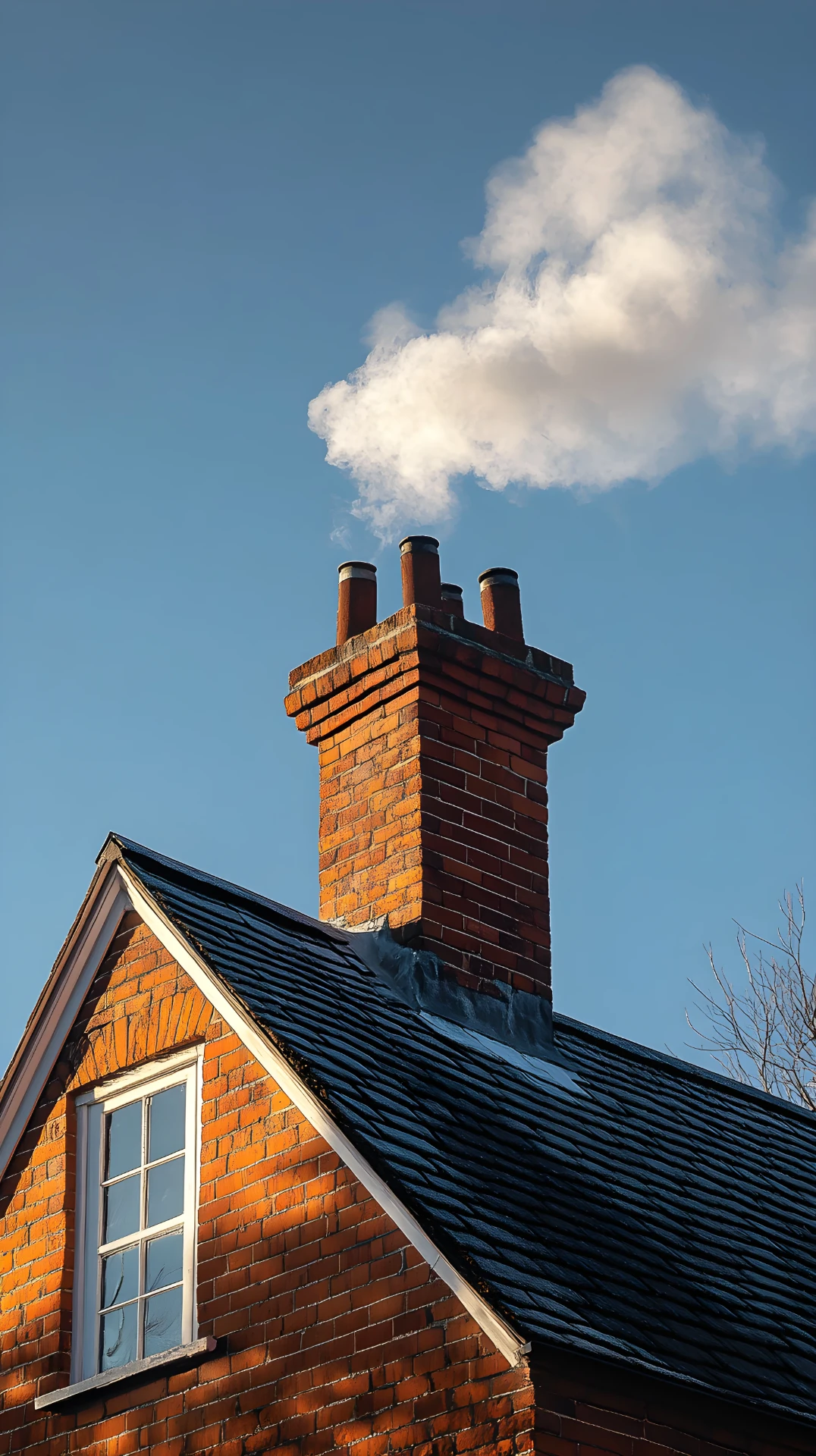
We survey the stack, tell you whether an above-roof takedown or full removal makes sense, and make the roof good so the removal is invisible from the street.
Signs a Poole stack should come down
- Pointing eroded on the exposed harbour-facing side
- Flaunching cracked and pots loose above a busy street or garden
- Damp on the breast that reappears after every south-westerly blow
- Lead flashing lifted or repeatedly re-mastic'd
- Salt-accelerated spalling on the brick faces
- A flue that has served nothing for decades
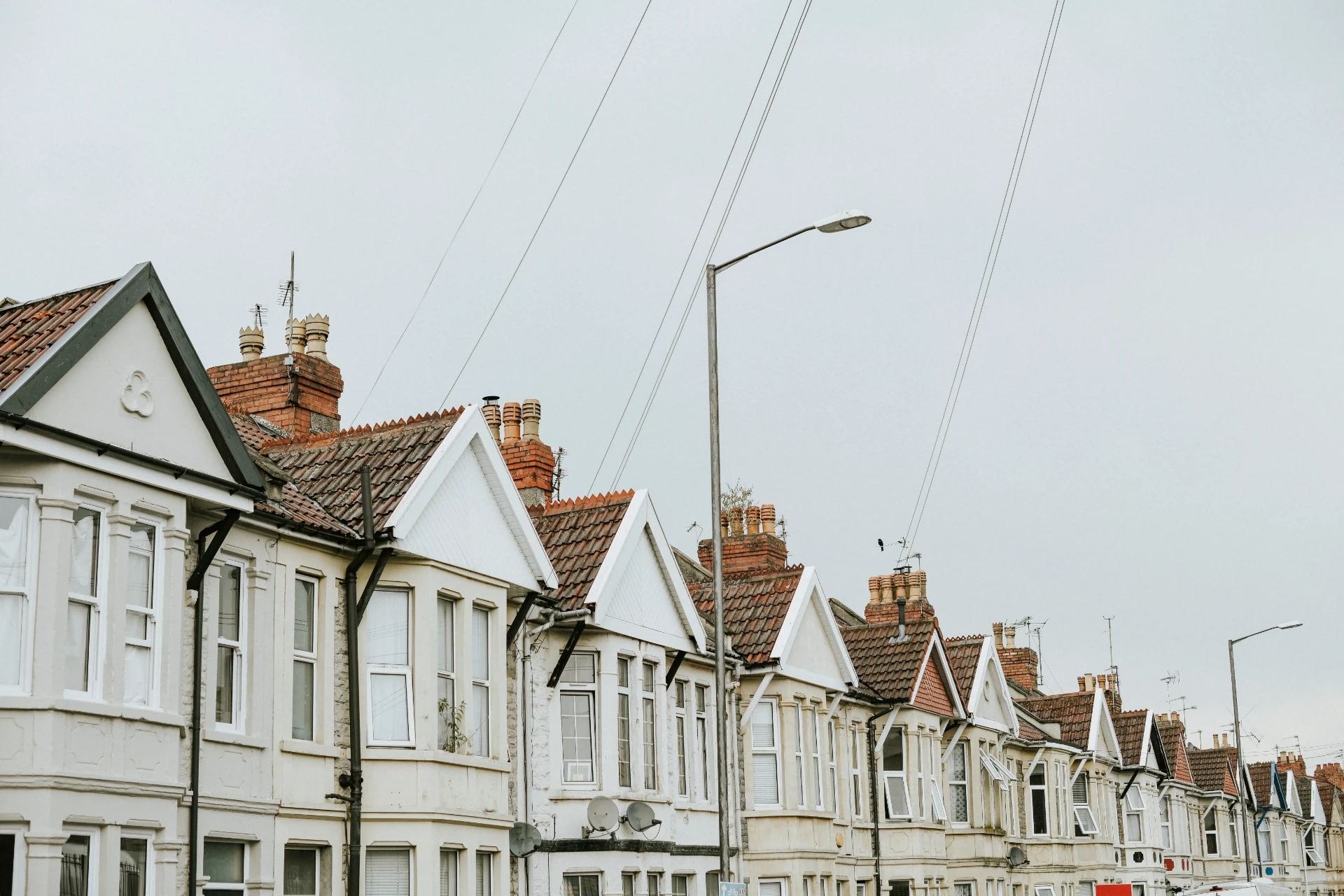
Wind-driven rain and the path it takes
Exposure here is not just rainfall, it is rain arriving sideways. Water is pushed into open joints, under lifted flashing and straight down an uncapped flue, then travels inside the masonry and shows on the breast lower down.
- 1Driven rain gets in at the top of the stack
- 2Cracked flaunching around the pot
- 3Open pointing and spalled brickwork
- 4Water tracks down the flue
- 5Lead flashing — another failure point
- 6Staining shows on the chimney breast below
Cap it at roof level or take out the breast
Partial removal ends the exposure and the repointing cycle for good. Full removal gains room space inside but adds structural work, plastering and building control to the project.
Retain & repair
Repoint it, re-flaunch, renew the flashing and cap it off. Keeps the roofline as built, though it does mean ongoing maintenance.
Down to roof line
We take off the exposed section and make the roof good, leaving the breast intact inside. Less disruption, and no internal work.
Full removal
Stack and breast come out completely, with structural support designed in. The biggest job, but it frees up floor space.
Take-down and weathering the roof
Hand dismantled with debris controlled, the flue capped or removed and remaining brickwork supported, then the roof framed, felted, re-tiled to match and finished in new lead.
Access & protection
Scaffold up to the stack, roof and grounds protected, and a debris route planned before a single brick moves.
Take down
We take the stack down course by course rather than pushing it over, lowering brick and pot out safely.
Support & make good
The opening is framed and supported, rafters and battens made up, and underlay dressed in.
Weather the roof
Tiles or slates laid to match, leadwork or a weathered detail finished, so the roof reads as one plane.
When removal beats repair
Repointing and re-flaunching is worth doing on a sound stack that still serves a working flue. Where the brickwork itself has spalled through, where the stack has moved, or where every flue is capped and unused, you are paying to maintain a liability at the highest point of the roof.
The other common driver in Poole is damp on a chimney breast that keeps returning no matter how many times the flashing is redone — because the water is coming through the stack itself.
Above-roof removal, step by step
- Scaffold and, where required, a debris chute or hand-down arrangement
- Brickwork taken down course by course to below the roof covering
- Rafters trimmed and supported, and new timbers installed to carry the infill
- Membrane and battens made continuous through the opening
- Covering matched in, using material salvaged from the roof wherever possible
- New lead or weathering to any adjacent detail affected by the work
Full removal through the building
Taking a breast out inside the house removes load-bearing brickwork and the remaining structure has to be supported — gallows brackets or a beam appropriate to the situation, with building control involvement where it applies. It also frees useful floor space, which is often the point of doing it.