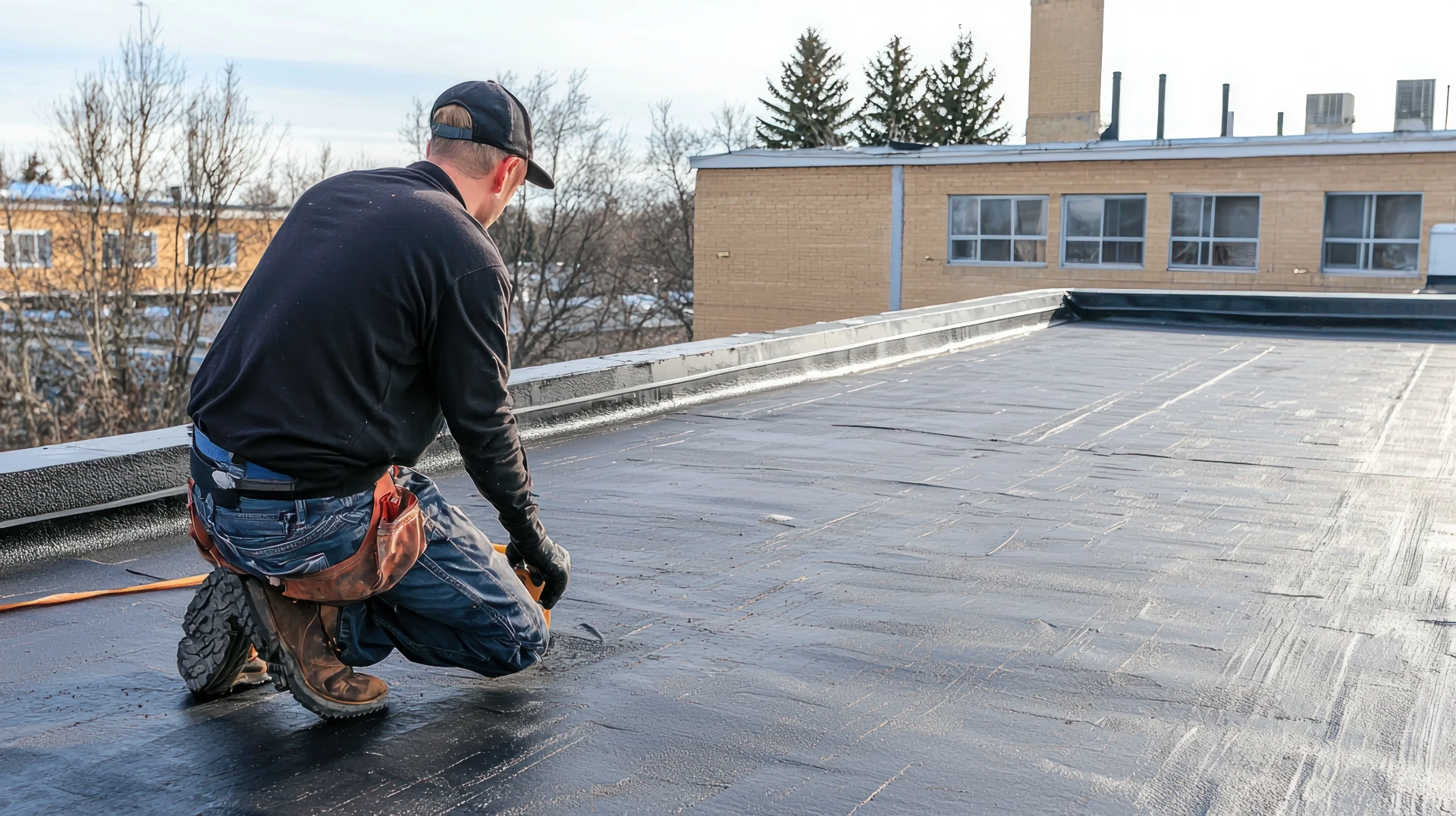
Almost every failure we're called to comes down to the same three things — standing water because the fall was never right, a detail at the upstand or trim, or a covering that's simply run out of life.
Coverings and where each one belongs
EPDM rubber
A single membrane with no seams across the field of the roof, which is why it suits garages, extensions and anything simple and rectangular. It stays flexible in cold weather and copes well with a bit of movement.
GRP fibreglass
Laid wet and cured in place, so it forms a hard, seamless surface that takes foot traffic well — the usual choice for balconies and any flat roof someone will walk on. It needs dry conditions to go in properly, which matters on a coastal site.
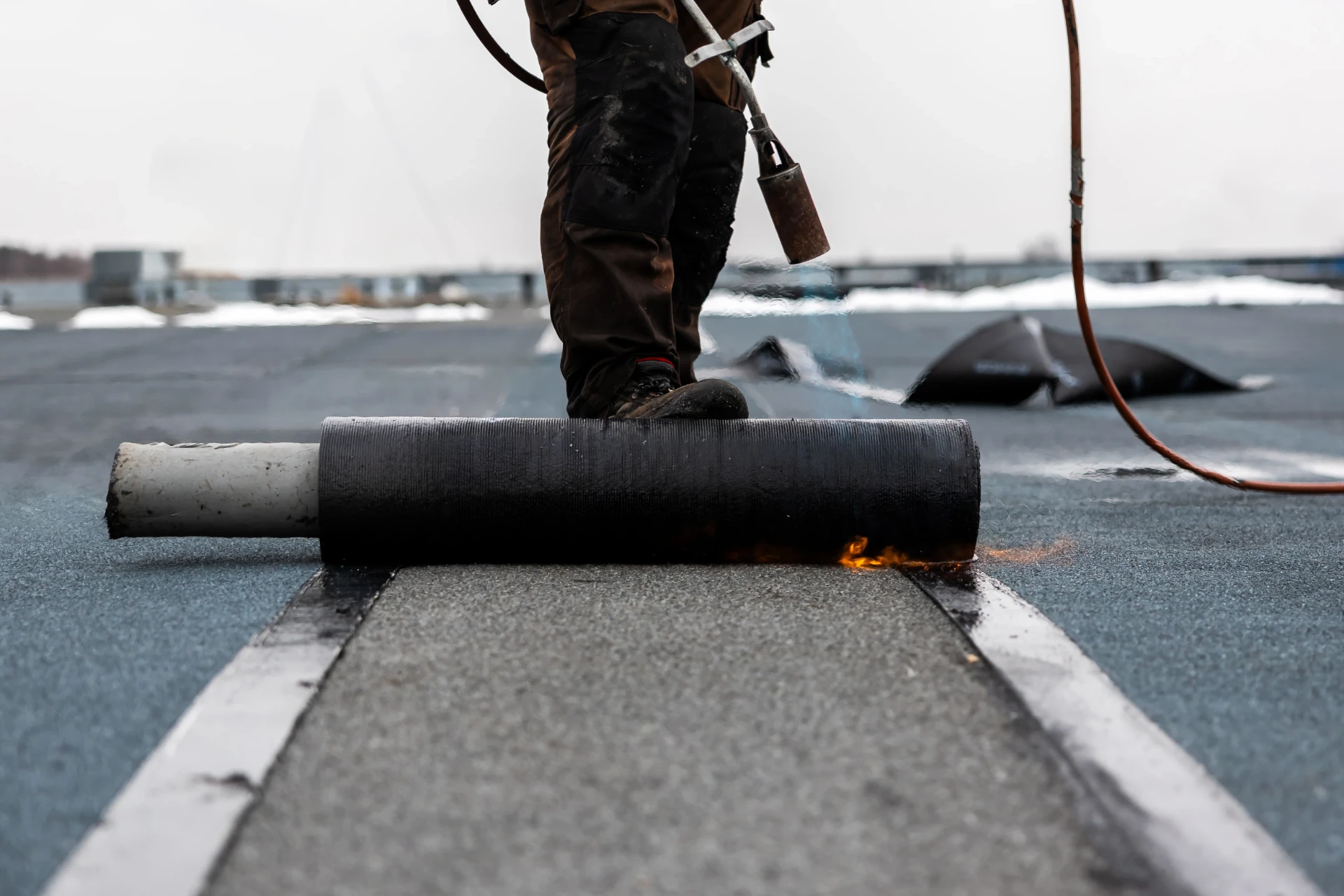
Torch-on felt systems
Modern high-performance felt is a world away from the failing single-layer felt it usually replaces. Multi-layer systems are still a sound, cost-effective answer on larger areas and on blocks where access and cost both matter.
Standing water and falls
A flat roof isn't flat. It needs a fall to move water to an outlet, and a lot of Bournemouth extension roofs were built without enough of one — or have lost it as the deck has sagged over time. Standing water speeds up the failure of any covering, and freezes into a wedge in winter.
Where the fall is wrong, we correct it with tapered insulation or firrings when we replace the deck. Laying a new membrane over an old ponding problem just buys you a few more years of the same fault.
Dormers, balconies and the sea
Loft conversions across Winton, Moordown and Southbourne have left thousands of small flat roofs on dormer tops, and they're exposed in a way a ground-floor extension isn't. Wind-driven rain hits the upstand and the trim rather than the field of the roof, so that's where we put the detailing effort — properly formed upstands, enough height above the covering, and edge trims that are fixed rather than just stuck down.
Common questions
What homeowners in Bournemouth usually want to know about flat roofing.
Ask us anything