
We assess the installation and explain whether removal is appropriate, with photographs of the visible roof structure and any issues found underneath.
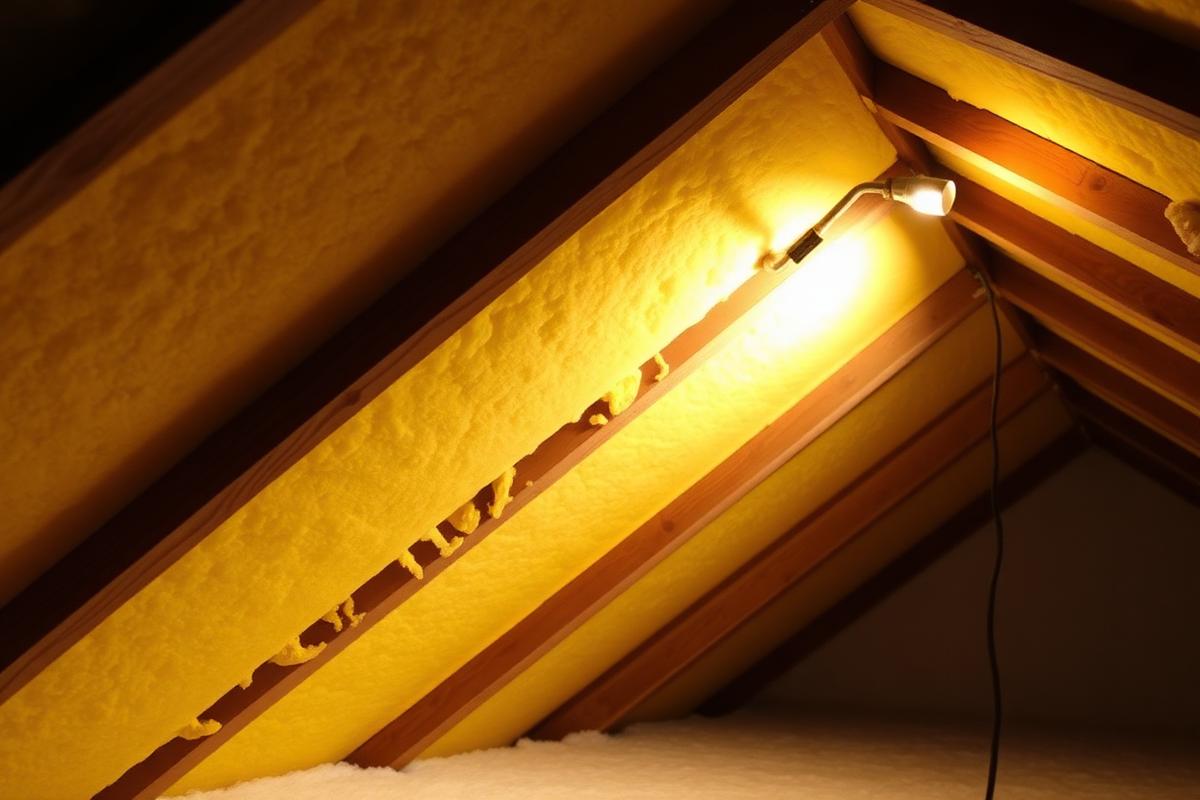
What foam looks like when you open the hatch
- A pale rigid crust, or a softer spongy layer, sprayed straight onto the slope
- Rafters and battens buried, with nothing left to inspect
- Ventilation gaps at the eaves filled solid
- Damp or musty air in a loft that used to be dry
- A mortgage, remortgage or equity release application stalled at survey
Why Hampshire lenders keep objecting
The objection is often about inspection. A surveyor may be unable to report fully on a roof they cannot see, so a lender may ask for more evidence or apply its own policy.
The physical effect also depends on the build-up: foam across the slope can reduce air movement, and foam bonded to timber can make drying and inspection more difficult.
- 1Spray foam bonded to the underlay, battens and rafters
- 2Eaves ventilation blocked
- 3Moisture held against the timber
- 4Rafters, battens and underlay cannot be inspected
The removal, step by step
We inspect and identify the foam, protect the hatch, route and rooms below, then cut and scrape the foam off rafters, battens and felt. Every bag is removed from site, the exposed structure is photographed, and we reopen the eaves and reinstate insulation at ceiling level.
Loft survey
We check the foam type, thickness and how much timber is bonded, and price it from what's actually there.
Strip out
Foam cut back from the rafters, battens and underlay, with the loft and access route protected throughout.
Timber inspection
Once the structure's exposed, we photograph it so the roof can finally be properly assessed.
Reinstate
Waste removed, ventilation reopened at the eaves, and insulation put back at ceiling level.
Comparing the three realistic options
Leaving it keeps the question open at the next valuation. A partial strip leaves some of the roof hidden. Removal may make more of the structure inspectable and allow ventilation details to be reviewed, depending on the roof construction and condition.
Leave it
Costs nothing today, but the roof stays hidden and any ventilation or inspection concerns remain to be assessed.
Partial strip
Cheaper, and sometimes it's all that's possible on an awkward roof. Any residue left on the timber will still hide parts of the structure.
Full removal
Removal can expose the timber for inspection and allow ventilation details to be reviewed — and we photograph what was underneath.
The problem in one sentence
Foam sprayed onto the underside of a roof can conceal the structure and affect ventilation, so inspection and moisture management may be more difficult.
Surveyors may limit what they can report on when areas are hidden, and a lender may ask for further evidence or decline an application depending on its policy and the roof's condition. Timber that stays damp can deteriorate over time.
Who typically calls us in Hampshire
- Homeowners whose sale has fallen through at survey stage
- Older owners whose equity release application has been declined
- Buyers who want the foam removed as a condition of exchange
- Landlords whose lender or insurer has queried the loft
- Owners who have noticed condensation, musty smells or damp patches since installation
Open cell versus closed cell removal
Open cell foam is spongy and can often be cut away in sections, leaving a residue we clean off the timber mechanically. Closed cell foam is rigid, bonded hard to rafters, battens and felt, and has to be cut and scraped away in much smaller pieces. It's slower, messier work, and needs a lot more care to avoid damaging what's underneath.
We identify which you've got at the inspection and price from what's actually up there rather than guessing.
What we leave behind
Clean, exposed rafters and battens. A photographic record of the timber condition. All foam and debris removed from site. Ventilation paths reopened at the eaves. And a separate, itemised quotation for any felt, batten or timber repair the foam had been hiding — which you're free to take elsewhere if you'd rather.
Common questions
What homeowners in Hampshire usually want to know about spray foam insulation removal.
Ask us anything