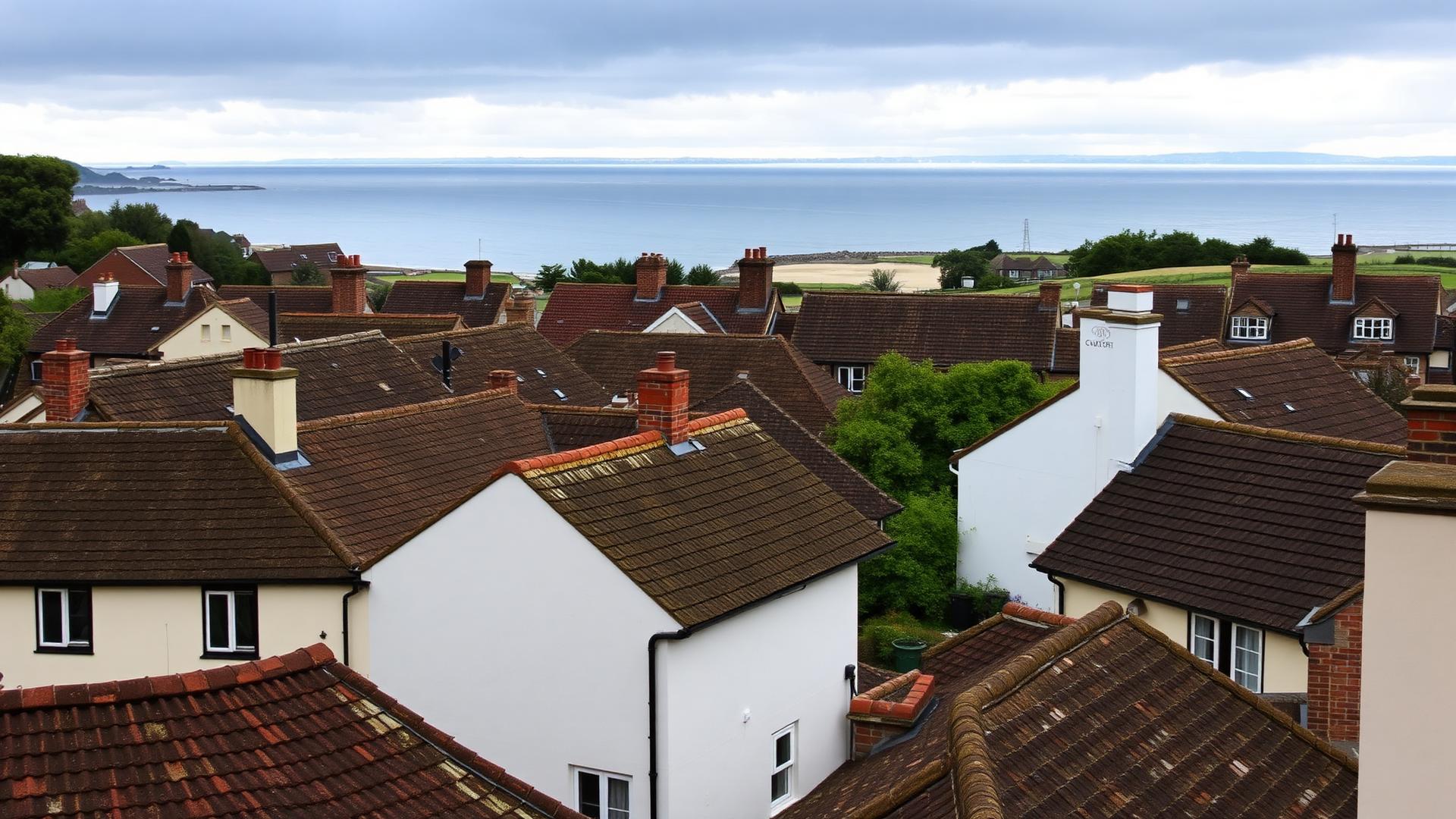
We assess the installation and explain whether removal is appropriate, cleaning and photographing the timbers where the work exposes them and reviewing the roof's ventilation details.
What you will see when you open the hatch
- Foam sprayed over rafters, battens and felt so nothing can be inspected
- Eaves ventilation sealed on a roof only a few hundred metres from the water
- Musty air or condensation on stored belongings
- A stalled sale, remortgage or equity release application in a strong Poole market
- A surveyor's report naming the foam as the reason
Salt air, sealed roofs and why the two do not mix
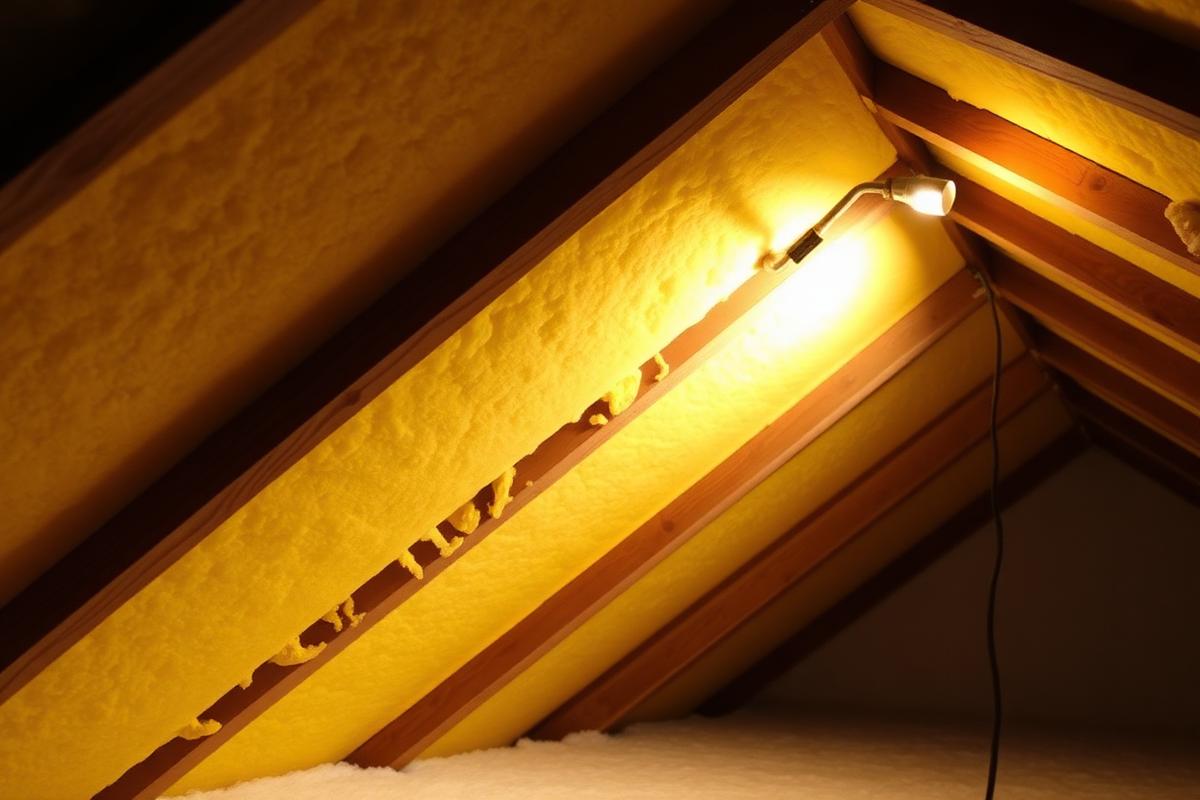
Coastal air carries salt and moisture, so the roof build-up and ventilation details are worth checking carefully. Foam across the slope can reduce air movement, while foam bonded to timber can make drying and inspection more difficult.
The fixings, nails and clout heads in a Poole roof already corrode faster than inland. Trapping damp against them behind foam nobody can inspect is the worst combination available.
- 1Spray foam bonded to the underlay, battens and rafters
- 2Eaves ventilation blocked
- 3Moisture held against the timber
- 4Rafters, battens and underlay cannot be inspected
How a Poole strip-out runs
Loft inspected and foam type identified, access route and rooms below protected, foam cut back off all timber and felt, everything bagged and removed, structure photographed, eaves reopened and ceiling-level insulation reinstated.
Loft survey
We check the foam type, thickness and how much timber is bonded, and price it from what's actually there.
Strip out
Foam cut back from the rafters, battens and underlay, with the loft and access route protected throughout.
Timber inspection
Once the structure's exposed, we photograph it so the roof can finally be properly assessed.
Reinstate
Waste removed, ventilation reopened at the eaves, and insulation put back at ceiling level.
Full removal against the alternatives
Leaving it in place keeps part of the roof hidden. A partial strip may suit a fragile roof, while fuller removal may make more of the structure inspectable and allow ventilation details to be reviewed.
Leave it
Costs nothing today, but the roof stays hidden and any ventilation or inspection concerns remain to be assessed.
Partial strip
Cheaper, and sometimes it's all that's possible on an awkward roof. Any residue left on the timber will still hide parts of the structure.
Full removal
Removal can expose the timber for inspection and allow ventilation details to be reviewed — and we photograph what was underneath.
Why lenders object
A surveyor cannot report on a roof structure they cannot see. Foam hides the rafters, the purlins and the condition of the membrane, and in a humid coastal atmosphere it creates exactly the still, damp conditions in which timber decays quietly.
The practical consequence is a valuation held up, a retention, or an offer withdrawn — which is how most people in Poole discover the problem.
The removal process
- Survey the loft and identify open or closed cell foam and how it was applied
- Protect the loft hatch, landing and rooms below before anything is disturbed
- Mechanically strip foam from rafters, purlins and the underside of the membrane
- Clean the timbers down so the structure is genuinely inspectable
- Report on any decay, damp staining or damaged felt found beneath
- Reinstate eaves and ridge ventilation, and remove all waste from site
If the membrane comes away with it
Closed cell foam frequently bonds so hard to the felt that removal destroys it. Where that happens the roof needs re-covering to be weathertight again, and we would sooner flag that at the survey so you can plan for it rather than meet it midway through the work. Combining the strip-out with a re-roof shares the scaffolding and the disruption.
Common questions
What homeowners in Poole usually want to know about spray foam insulation removal.
Ask us anything